Gemstones like jade, ruby, sapphire, and quartz are extremely hard yet brittle, making wrong micromotor choices lead to chipped facets, broken stones, or motor burnout. While many focus on high RPM, real-world lapidary precision and tool longevity depend on low-speed torque and spindle concentricity. This 4-step framework helps you select the ideal system based on material hardness, workload, and ergonomics.
I.The 4-Step Framework: How to Evaluate a Gemstone Micromotor
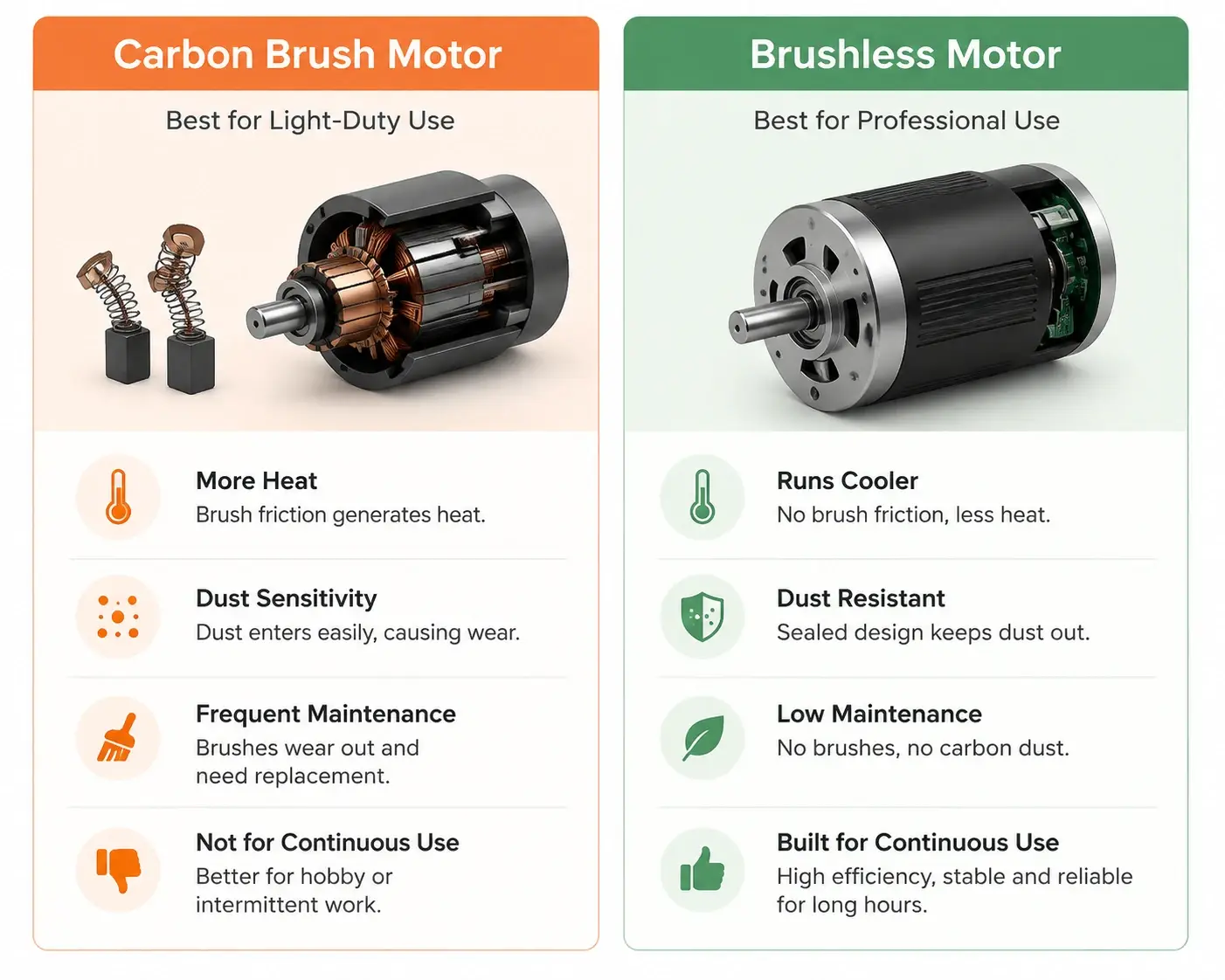
Step 1: Match Motor Type to Workload Intensity
- Carbon Brush Motors: These units use physical graphite brushes to transfer electrical current to the rotating commutator. While economical upfront, brush friction generates considerable heat during extended carving sessions. Furthermore, abrasive stone slurry and airborne quartz dust enter unsealed motor housings, accelerating brush degradation and requiring frequent replacement. Brush motors suit light-duty hobby work or intermittent bench use.
- Brushless Motors: The industry benchmark for professional lapidary operations. Operating via electronic commutation, brushless systems feature no wearable brushes, eliminating internal carbon dust. They run significantly cooler, deliver higher power transfer efficiency, and maintain a sealed internal environment that resists abrasive stone dust during continuous production runs.
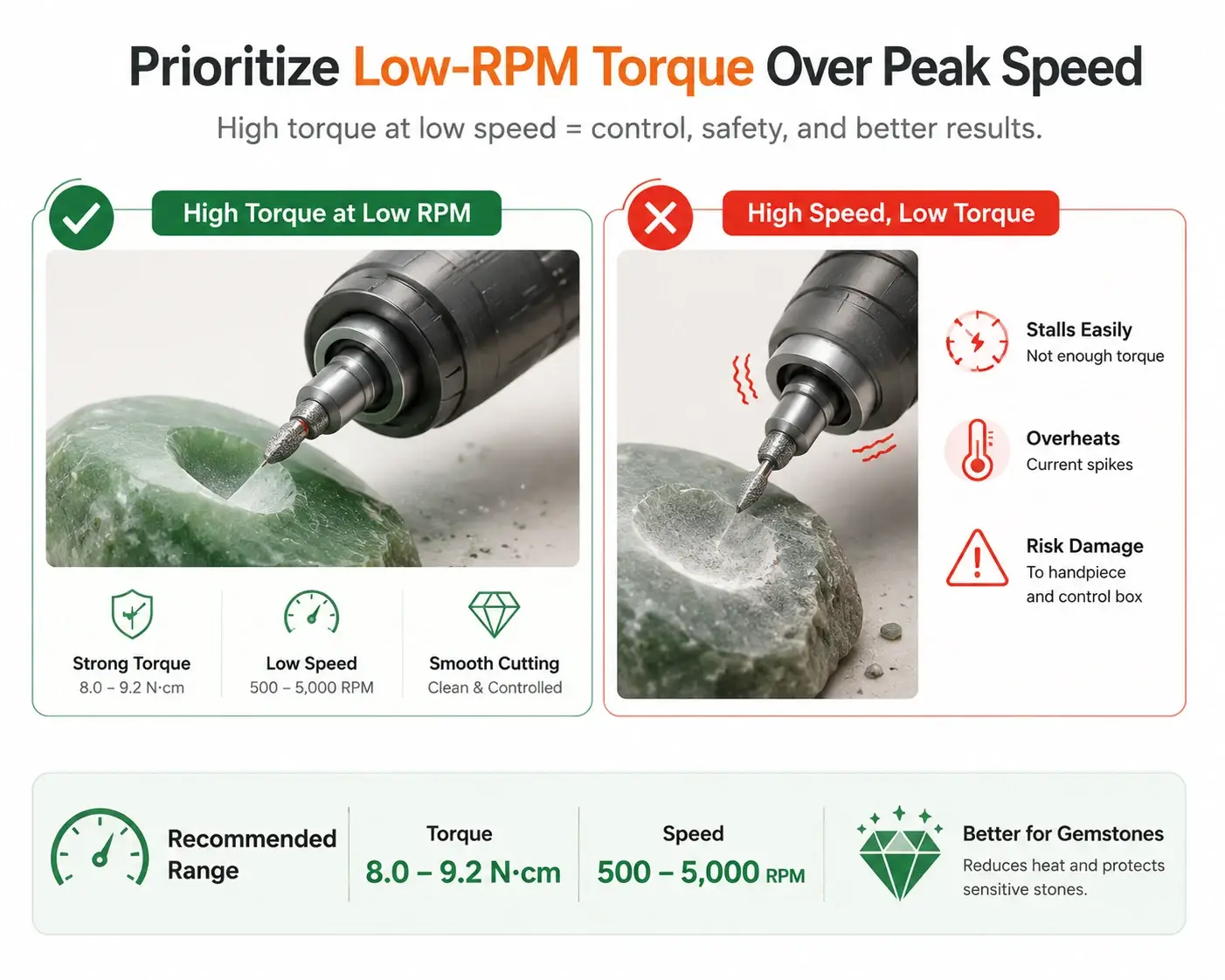
Step 2: Prioritize Low-RPM Torque Over Peak Speed
When grinding hard silicates or corundum, diamond burrs encounter high mechanical resistance. If a handpiece lacks sufficient low-end torque (below 8.0 N·cm), applying downward pressure causes the spindle to stall. Repeated stalling causes current spikes that overheat the control box.
Evaluate units capable of delivering sustained torque between 8.0 and 9.2 N·cm at lower operational speeds (500 to 5,000 RPM). High torque at low RPM allows clean, controlled material removal without generating excessive thermal stress on heat-sensitive gems like opal or turquoise.
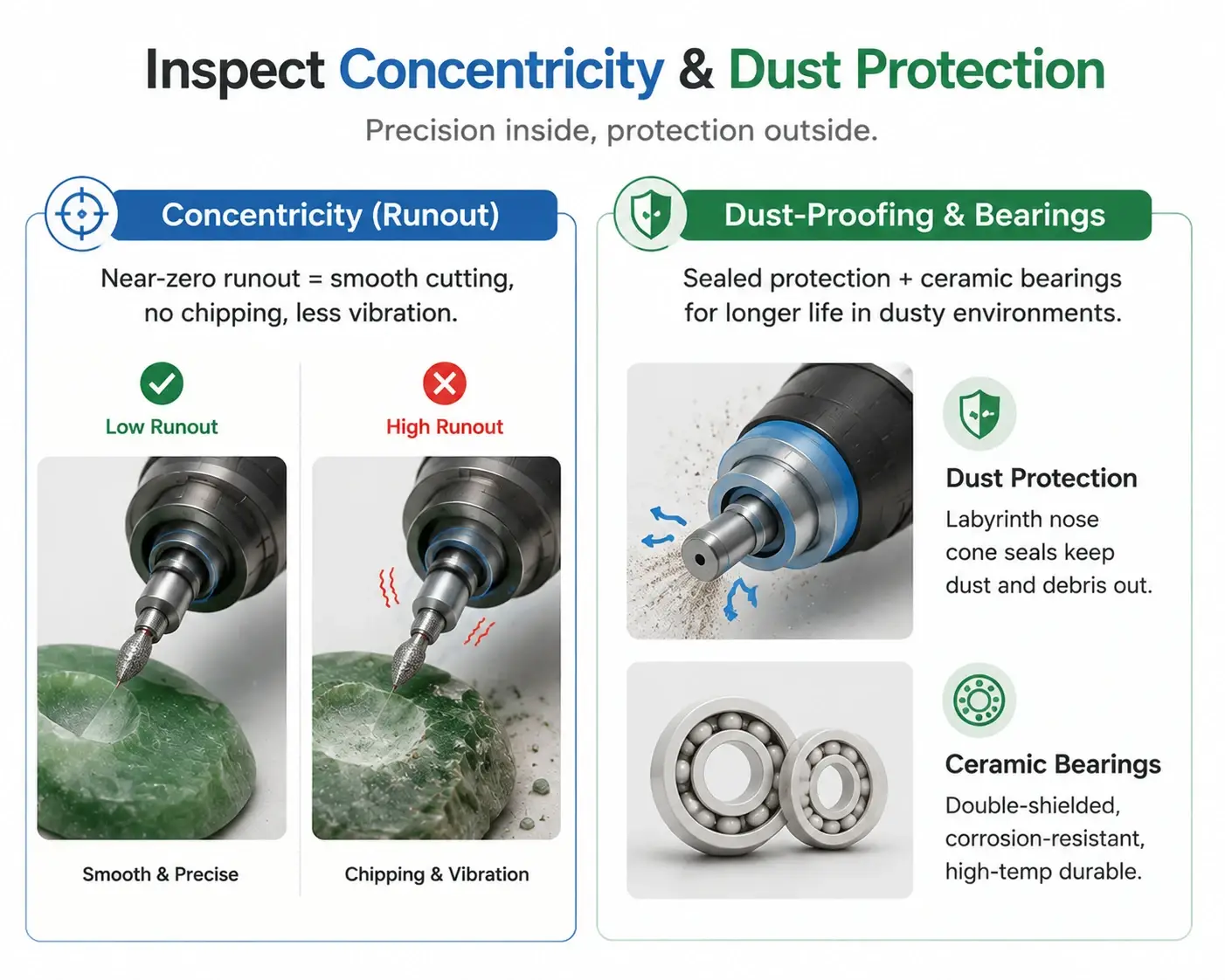
Step 3: Inspect Concentricity & Dust Protection
- Concentricity (Runout): Radial and axial spindle play must remain near zero. Even a micro-fraction of millimeter runout causes the diamond burr to strike the gemstone like a miniature hammer rather than shaving it smoothly. This micro-impact causes micro-fracturing along cleavage planes, chipping delicate edges and transferring high-frequency vibration into the carver’s hand.
- Dust-Proofing & Bearings: Lapidary dust acts as an industrial abrasive. Ensure the handpiece incorporates labyrinth nose cone seals to block debris from entering the spindle. High-tier handpieces utilize double-shielded, precision ceramic bearings, which resist corrosion, withstand high operating temperatures, and outlast standard steel bearings in high-dust environments.
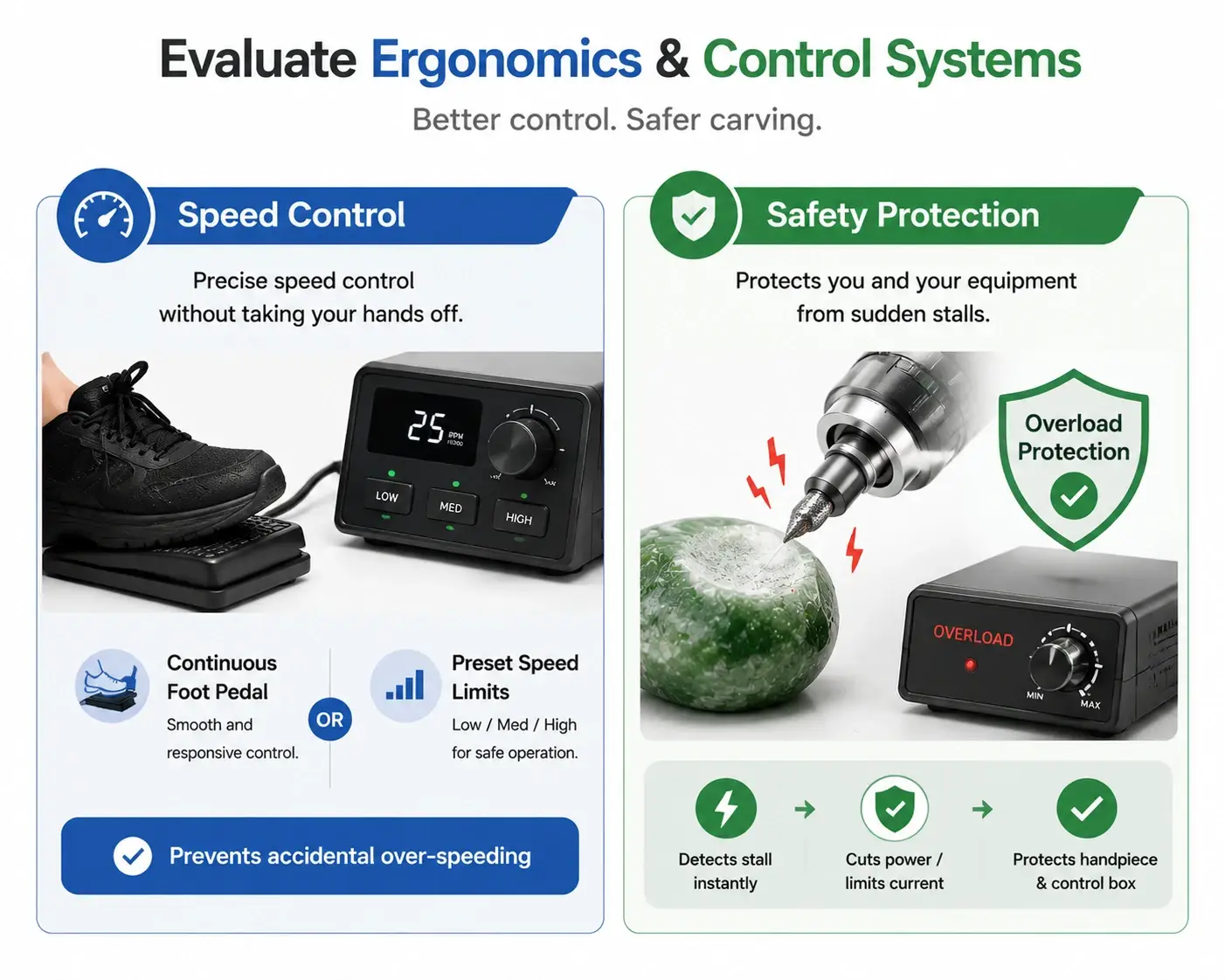
Step 4: Evaluate Ergonomics & Control Systems
- Speed Control: Fine detail carving requires subtle speed adjustments without taking your hands off the work piece. Look for responsive speed interfaces, such as continuous foot pedals or multi-preset speed limits (Low/Med/High) on the control unit, which prevent accidental over-speeding when switching burr diameters.
- Safety Protection: Hard stone can catch or bind a burr instantly. The control box must feature an automated overload protection system that cuts power or limits current draw within milliseconds of a mechanical stall, protecting both the handpiece armature and control board from electrical burnout.
II. Decision Matrix: Selecting the Right System for Your Specific Workflow
Different carving workflows require distinct handpiece configurations. Use this matrix to match your operational requirements with the appropriate equipment specifications:
| Feature / Spec |
Scenario A: High-Precision Micro-Carving |
Scenario B: Heavy Material Removal & Bulk Shaping |
Scenario C: Workshop Multi-Bench Production |
| Primary Goal |
Intricate relief, line engraving, fine polishing |
Rapid pre-forming, cabochon roughing, de-coring |
Standardized output, multi-operator durability |
| Target Torque |
8.5 N·cm (High low-end response) |
9.0 – 9.2 N·cm (Maximum mechanical load) |
8.0 N·cm (Consistent daily torque) |
| Speed Range |
500 – 55,000 RPM (Low-end start) |
Up to 60,000 RPM (Power reserve) |
Up to 55,000 RPM (Preset stepped limits) |
| Key Features |
Wireless Bluetooth pedal, zero-vibration spindle |
Heavy 240W–250W supply, ceramic bearings |
3-Speed presets (Low/Med/High), robust housing |
| Recommended Setup |
PRIME SENSE A9 Class System |
Prime 926 Heavy-Duty System |
Prime SENSE A6 Value System |
Scenario A: High-Precision Micro-Carving & Detail Polishing
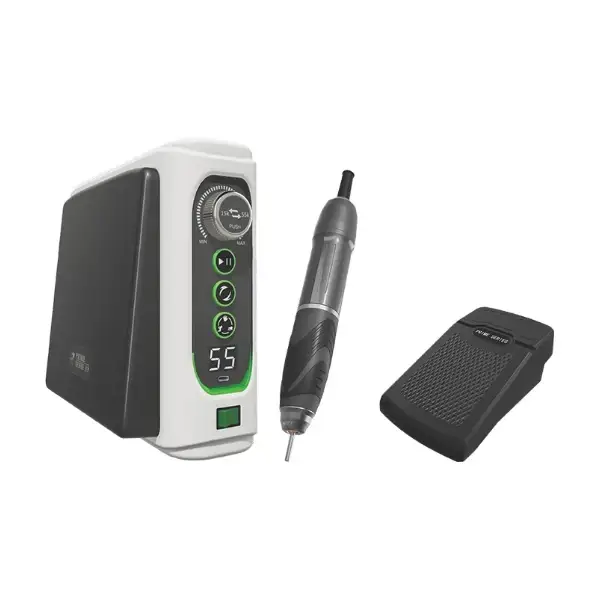
- Key Criteria: Low-RPM torque stability, minimal vibration, and a clean workbench.
- Configuration — Precision Control Solution (Featured: PRIME SENSE A9): Engineered specifically for master engravers, the PRIME SENSE A9 delivers a true 500 RPM ultra-low startup speed backed by an impressive 8.5 N·cm low-speed torque profile. Unlike standard micromotors that shudder or stall under light pressure, the A9 allows you to trace razor-thin lines and execute intricate facial details on high-hardness gems with zero burr hesitation. Paired with a seamless wireless Bluetooth foot pedal, it completely eliminates cable drag across your workbench, giving you uncompromised fluid control and a distraction-free carving environment.
Scenario B: Heavy Material Removal & Bulk Shaping
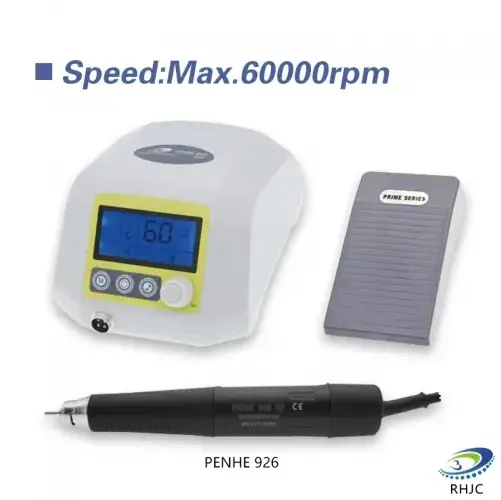
- Key Criteria: High wattage output (240W+), top-tier torque, and extreme thermal durability.
- Configuration — Heavy-Duty Powerhouse Solution (Featured: Prime 926): When aggressive material removal is required, the Prime 926 stands as an unyielding workhorse. Packing a massive 250W power supply and a class-leading 9.2 N·cm torque capacity, this unit cuts through dense gemstone matrix and rough quartz without choking. Built for brutal, all-day shop environments, it features imported ceramic bearings that withstand high thermal friction and abrasive powder—delivering 1.5x longer operational life than standard steel bearings even under continuous heavy downward load.
Scenario C: Workshop Multi-Bench & Standardized Production
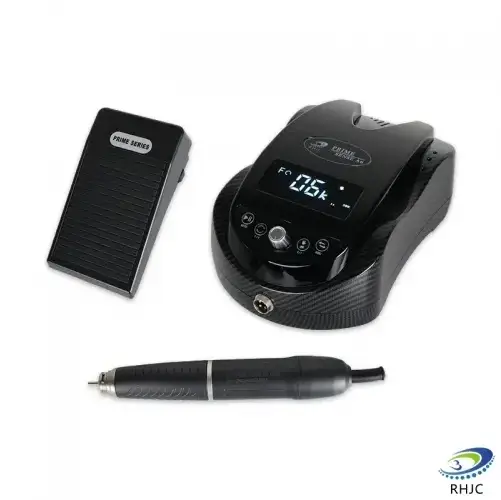
- Key Criteria: Preset speed limits, maintenance-free motor, and high ROI for bulk setups.
- Configuration — High-Efficiency Workshop Solution (Featured: Prime SENSE A6): Designed to streamline commercial lapidary operations, the Prime SENSE A6 combines heavy-duty 8.0 N·cm brushless power with an intuitive 3-speed preset selector (Low / Medium / High). This enables workshop managers to quickly standardize speed boundaries for specific materials—preventing technicians from over-speeding diamond bits while eliminating guess-work. The maintenance-free brushless motor eliminates carbon dust contamination and downtime, making it the ultimate high-ROI solution for multi-bench fleet upgrades.
III. Checklist: 3 Common Mistakes When Buying a Gemstone Micromotor
- Chasing Unusable Peak RPM: Purchasing a system based solely on a 50,000+ RPM specification is counterproductive. Real-world lapidary grinding occurs primarily within the 5,000 to 20,000 RPM range. High rotational speeds generate extreme heat, rapidly dulling diamond burrs and thermally shocking sensitive gemstones. Look for sustained torque under load rather than empty spin speed.
- Ignoring Stall Protection: When a diamond point catches on a hard inclusion, the motor stops instantly while drawing maximum amperage. Control units without fast-acting overload sensors will burn out their drive transistors in seconds. Always verify automatic overload and fault diagnostic features.
- Overlooking Collet Mechanism Compatibility: Lapidary slurry can migrate into poor-quality handpiece chucks, causing collet seizure or shank slippage. Ensure the handpiece utilizes a triple-wedge spring collet (Twist-Lock mechanism) engineered for standard 2.35mm (3/32") or 3.0mm shank lapidary burrs.
Conclusion
Choosing the optimal gemstone carving micromotor comes down to matching your primary material hardness and production volume with the correct torque profile and protective features. Prioritizing low-RPM stability, spindle concentricity, and sealed brushless construction ensures clean, repeatable carving results while keeping equipment repair costs to a minimum.
RHJC is a specialized micromotor manufacturer and supplier engineering high-precision systems for gemstone engraving, jewelry manufacturing, and industrial lapidary applications. We provide factory-direct supply, OEM customization, and wholesale distribution for studios and commercial distributors worldwide. Contact our technical team today to discuss bulk purchasing options or select the ideal system configuration for your production requirements